

Introduction
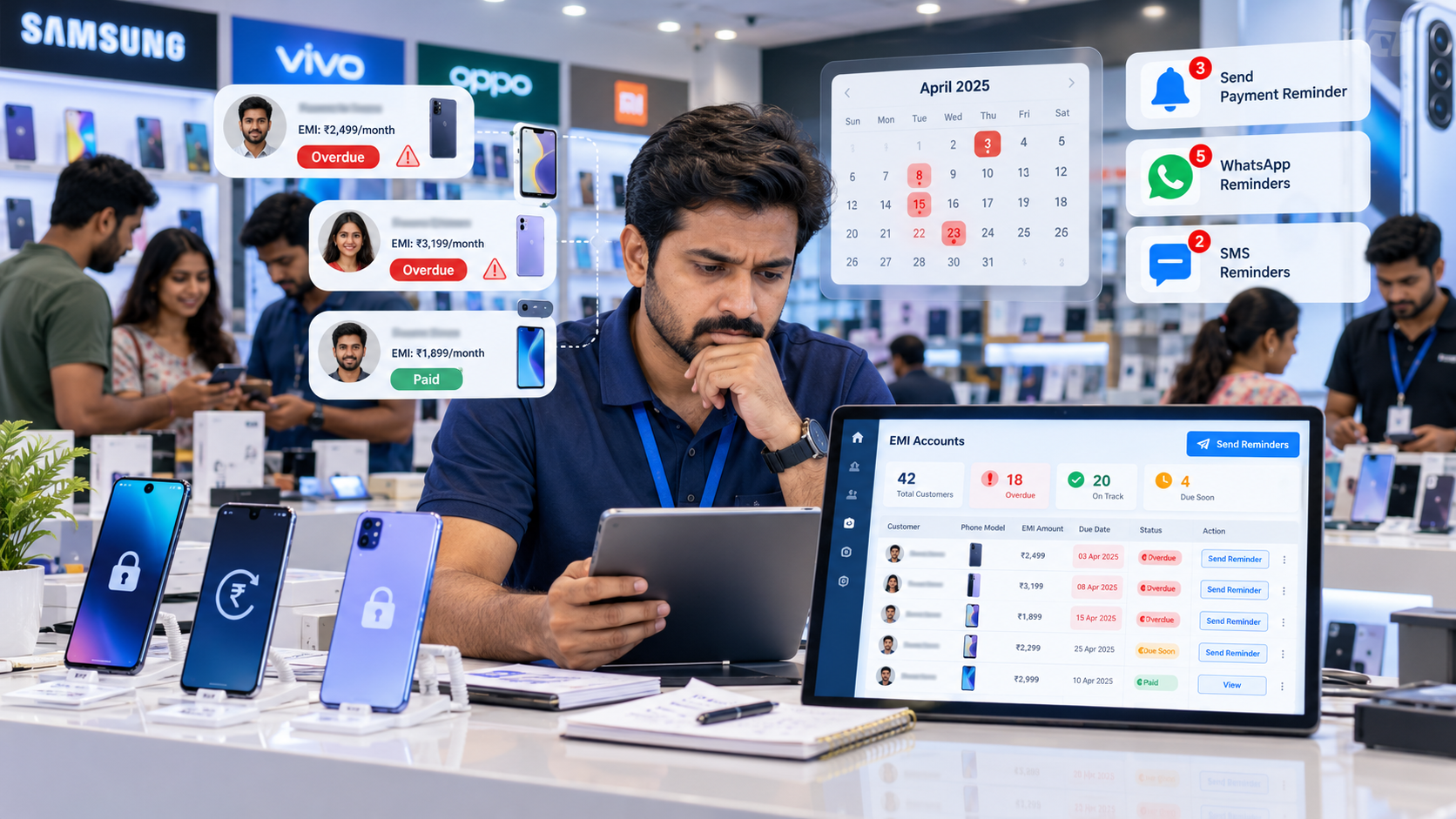
A customer buys a smartphone on EMI, pays the first few installments, and then suddenly stops making payments. Your calls go unanswered, payment dates keep passing, and the remaining amount is still pending. Customers Not Paying Their Phone EMIs? This is a common challenge for mobile retailers, as missed payments can affect cash flow and make it harder to manage new sales. Instead of repeatedly calling customers, retailers need a clear process to handle overdue payments. With proper communication, accurate records, and reliable EMI Locker Software, businesses can manage pending EMIs more effectively.
Why Do Customers Miss Their Phone EMI Payments?
Not every missed EMI means a customer is trying to avoid payment. There can be several reasons behind delayed installments. Some common reasons include:
- Financial Problems: Customers may face unexpected expenses or temporary income issues.
- Forgotten Due Dates: Some customers simply forget their EMI payment dates.
- Multiple Loans: Managing several monthly installments can become difficult.
- Payment Issues: Failed transactions or technical problems may delay payments.
- Poor Communication: Customers may not receive timely reminders or clear payment information.
- Intentional Defaults: Some customers may stop responding despite repeated payment notices.
Understanding the reason behind a missed payment helps retailers choose a suitable recovery approach.
What Should Retailers Do When Customers Stop Paying EMIs?
Retailers should follow an organized process rather than immediately taking strict action against customers.
1. Check the Customer's Payment History
Before contacting a customer, review their payment records.
Check:
- The last EMI payment date.
- The total outstanding amount.
- The number of missed installments.
- Any pending or failed transactions.
- Previous payment reminders.
Accurate records help prevent unnecessary disputes and ensure customers receive the correct information.
2. Send a Friendly Payment Reminder
A customer may miss an installment because they forgot the due date. Start with a polite reminder through an approved communication channel, such as SMS, WhatsApp, or a phone call. A useful payment reminder should mention:
- Customer or loan reference number.
- Pending EMI amount.
- Original payment due date.
- Available payment methods.
- Contact details for assistance.
Avoid threatening language or excessive calls. A professional approach can help maintain customer relationships.
3. Understand Why the Payment Is Delayed
If the customer responds, ask about the reason for the delay. For example, a customer may be waiting for their salary or facing a temporary financial problem. Where permitted by the financing agreement and the lender's policies, retailers can guide customers toward available repayment assistance or revised payment arrangements. The goal should be to resolve the overdue payment through clear communication.
4. Keep Proper Records of Every Follow-Up
Managing customer payments through notebooks or scattered messages can lead to confusion. Retailers should maintain records of:
- Customer contact details.
- Financed smartphone information.
- EMI amounts and due dates.
- Payment confirmations.
- Reminder history.
- Customer responses.
An EMI Management Software solution can help keep this information organized and reduce manual work.
5. Use EMI Locker Software for Financed Devices
When retailers manage many EMI customers, checking every account manually becomes time-consuming. An EMI Locker App can support financed-device management, payment tracking, and recovery workflows. Depending on the software features, retailers may be able to:
- Register financed smartphones.
- Monitor device-related EMI status.
- Organize payment reminders.
- Identify overdue accounts.
- Manage authorized device controls.
- Update records after payments.
These features help retailers handle device-financing operations from a more organized system.
Can Retailers Lock a Phone for Unpaid EMI?
This is an important question for businesses selling smartphones on installments. A retailer cannot automatically lock a customer's phone simply because an EMI is unpaid. Any device restriction must comply with the financing agreement, applicable law, customer permissions and relevant regulatory requirements. Where device locking is legally permitted, the process must also protect the customer's rights.
The RBI's 2026 device-restriction framework, scheduled to take effect in January 2027 for covered regulated lenders, introduces requirements concerning overdue periods, notices, essential services, privacy, and unlocking after payment. To understand the legal conditions
in more detail, read Can a Finance Company Legally Lock Your Phone in India?.
Retailers should always work with their financing partners and follow the applicable rules before using any locking feature.
How Can Finance Locker Software Help Reduce EMI Payment Problems?
Managing overdue payments becomes more difficult as the number of financed smartphones increases. Finance Locker Software can help retailers maintain better control over their device-financing records and identify accounts that need attention.
Better Payment Tracking
Retailers can monitor recorded EMI information and identify overdue accounts without checking multiple manual records.
Organized Customer Follow-Ups
Payment reminders and customer communication can be managed through a more structured process.
Improved Device Records
Keeping financed-device information organized makes it easier to identify which device belongs to a particular financing account.
Support for Fraud Prevention
Clear device registration, customer verification procedures, and accurate transaction records can help businesses identify suspicious activity. However, software alone cannot eliminate financing fraud. Retailers should also verify customer information and follow proper documentation procedures.
Learn more in How Finance Locker Software Helps Prevent EMI Fraud in India.
Why Is White Label EMI Locker Useful for Mobile Retailers?
Retailers need software that fits their business size, customer volume, and financing process. White Label EMI Locker, developed by Devolyt Technologies Pvt. Ltd which provides customizable EMI device-management solutions for mobile retailers, distributors NBFCs, and finance companies. Under the leadership of Aditya Gupta, Founder & CEO of Devolyt Technologies Pvt. Ltd., the company focuses on developing practical software for businesses managing EMI-financed smartphones.
White Label EMI Locker offers business-focused options such as:
- Custom Branding: Create an EMI locker app with your business name and logo.
- Device Registration: Maintain information about financed smartphones.
- Key-Based Activation: Manage device registration through available activation plans.
- EMI Monitoring: Organize payment-related device information.
- Retailer Management: Support daily device-financing operations.
- Recovery Workflows: Manage overdue accounts and authorized device-related actions.
For businesses comparing available solutions, explore Why Businesses Choose White Label EMI Locker Over Other EMI Lock Apps.
How Can Retailers Reduce Missed EMI Payments in the Future?
Preventing payment problems starts before a smartphone is handed over to the customer.
Retailers can follow these simple practices:
- Verify Customer Details: Collect and verify the required information through authorized procedures.
- Explain EMI Terms: Clearly communicate the installment amount, due date, charges, and repayment conditions.
- Choose Suitable EMI Plans: Help customers understand whether the repayment amount fits their budget.
- Maintain Digital Records: Keep financing and device information organized.
- Send Timely Reminders: Inform customers before and after payment due dates.
- Use Reliable Software: Choose an EMI management solution that supports the business's operational requirements.
- Follow Legal Recovery Practices: Avoid harassment, unauthorized locking, or unfair collection methods.
These steps can help retailers improve payment management while maintaining customer trust.
Conclusion
Unpaid phone EMIs can create financial and operational challenges for mobile retailers. However, clear communication, accurate payment records, and responsible recovery practices can make these situations easier to manage. White Label EMI Locker, developed by Devolyt Technologies Pvt. Ltd., offers customizable software for businesses that want to organize financed-device management and EMI recovery workflows.
Still managing overdue EMIs manually? Visit White Label EMI Locker to explore a branded EMI device-management solution for your business.
Ready to Launch Your White Label EMI Locker?
Talk to Aditya Gupta — Founder & CEO of Devolyt Technologies — and get a custom quote for your EMI Locker platform.
Get a Free Consultation →