

Introduction
Managing 20 or 30 EMI customers in a mobile shop may seem easy. You can remember payment dates, update customer records and make reminder calls when needed. But what happens when your business grows to 200, 300 or even 500+ EMI customers? Tracking every installment and following up with customers becomes much more difficult.
As your business expands, managing 500+ EMI customers requires more than Excel sheets, notebooks and manual phone calls. Mobile retailers need a proper system to track payments, maintain customer details and manage financed smartphones without increasing their daily workload.
Why Managing 500+ EMI Customers Becomes Difficult
Selling more smartphones on EMI helps mobile retailers increase sales. However, every new financed customer also adds another payment schedule to manage. For example, if your shop has 500 customers paying monthly installments, you may need to check hundreds of due dates, payment updates and overdue accounts every month. Without proper EMI management software, this can create several problems:
- Difficulty finding customer payment records.
- Missed EMI due dates.
- More time spent on reminder calls.
- Incorrect payment updates.
- Confusion about outstanding EMI amounts.
- Delays in preparing collection reports.
These problems can slow down daily shop operations and make future expansion harder.
5 Challenges Mobile Retailers Face While Managing 500+ EMI Customers
1. Tracking Hundreds of EMI Payments
When you have a small number of customers, maintaining payment records manually may work. But with 500+ EMI customers, checking every installment becomes time-consuming. Retailers need to know:
- Which customers have paid their EMI?
- Who has an installment due this week?
- How many payments are overdue?
- What is the total outstanding EMI amount?
A centralized EMI tracking system can help retailers find this information without checking individual customer records.
If your shop still relies on spreadsheets, read Are You Still Using Excel to Manage Mobile EMI Payments? to understand when moving to dedicated EMI management software makes sense.
2. Making Too Many Payment Reminder Calls
Imagine calling 100 customers to remind them about their upcoming installments. Even if each call takes only two minutes, your staff could spend more than three hours making reminder calls. Now imagine doing this regularly while also handling walk-in customers and mobile sales. Automated reminders can reduce repetitive communication and help customers stay informed about their payment dates.
If your staff are spending too much time on collection calls, read Still Chasing Customers for EMI Payments? Use an EMI Locker App to understand how digital tools can simplify payment follow-ups.
3. Managing Customer Records in Different Places
Some mobile retailers save customer details in Excel, payment receipts in folders, and important conversations on WhatsApp. This can become confusing when customer numbers increase. For example, a customer may visit the shop to ask about a previous installment. Your staff might need to search multiple files before finding the correct information. A digital customer-management system can keep essential details together, including:
- Customer name and contact number.
- Financed smartphone details.
- EMI amount and due dates.
- Previous payment records.
- Pending installment information.
Organized records help retailers respond to customer questions faster.
4. Handling Overdue EMI Customers
Not every customer pays on time. Some forget their EMI dates, some experience temporary financial difficulties, and others may stop responding to payment reminders. When a shop manages hundreds of customers, following up with overdue accounts individually can become difficult. Retailers need a clear process for identifying missed payments and communicating with customers.
Following the Best Ways for Mobile Retailers to Manage Customers Buying Phones on EMI can help businesses improve payment tracking, customer communication and overdue account management.
5. Managing Financed Smartphones
Customer payments are only one part of mobile EMI operations. Retailers may also need to maintain records of financed smartphones and manage enrolled devices according to their financing agreements. A basic spreadsheet can store phone details, but it cannot directly perform device-management operations. A compatible EMI Locker App may provide authorized device controls, including supported remote locking and unlocking features, subject to customer consent and applicable legal requirements.
Is Your Mobile Shop Ready for 500+ EMI Customers?
Before increasing your EMI customer base, ask yourself these questions:
- Can you check all pending EMI payments from one dashboard?
- Can your staff quickly find any customer's payment history?
- Do customers receive reminders before their EMI due dates?
- Can you identify overdue EMI accounts without checking multiple files?
- Are customer and financed-device records properly organized?
- Can your current system handle more customers without adding too much manual work?
If your answer is no to several of these questions, your shop may benefit from a more organized EMI management system.
How Can an EMI Locker App Help Manage 500+ Customers?
An EMI Locker App for mobile retailers can bring customer information, payment schedules, and financed-device management into one platform. Here are some useful capabilities.
1. Centralized EMI Dashboard
A single dashboard helps retailers view customer accounts, installment schedules, and payment information. Instead of opening different spreadsheets, staff can find the required information from one system.
2. Automated EMI Payment Reminders
Retailers can use supported reminder features to notify customers about upcoming or overdue installments. This helps reduce the number of manual reminder calls.
3. Digital Customer Management
Customer information can be maintained in a structured format, making records easier to find and update.
4. Payment Status Monitoring
Retailers can review paid, pending, and overdue installments through digital records and available reports.
5. Financed Device Management
A compatible EMI Locker App can help manage enrolled smartphones through supported security and device-management features. To understand which capabilities matter most, explore What Features Should a Good Mobile EMI Locker Have? before selecting software for your business.
How to Prepare Your Mobile Shop for Business Growth
Managing 500+ EMI customers requires a clear process, not just additional staff.
Here are some practical steps.
Step 1: Move Customer Records to a Digital System
Maintain customer information, financing details, and installment schedules in one place.
Step 2: Set Up Payment Reminders
Use automated reminders to inform customers before their payment due dates.
Step 3: Review Overdue Payments Regularly
Check overdue accounts and assign follow-up responsibilities to the appropriate staff members.
Step 4: Train Your Employees
Make sure your staff understand how to update payment information, manage customer records, and use the dashboard correctly.
Step 5: Choose Scalable EMI Management Software
Select a solution that can support your expected customer growth, device requirements, and business operations.
Retailers planning to expand their EMI sales can also read Selling Phones on EMI? Here's How to Manage Customers and Payments for practical customer and installment management tips.
Manage Your Growing EMI Business with White Label EMI Locker
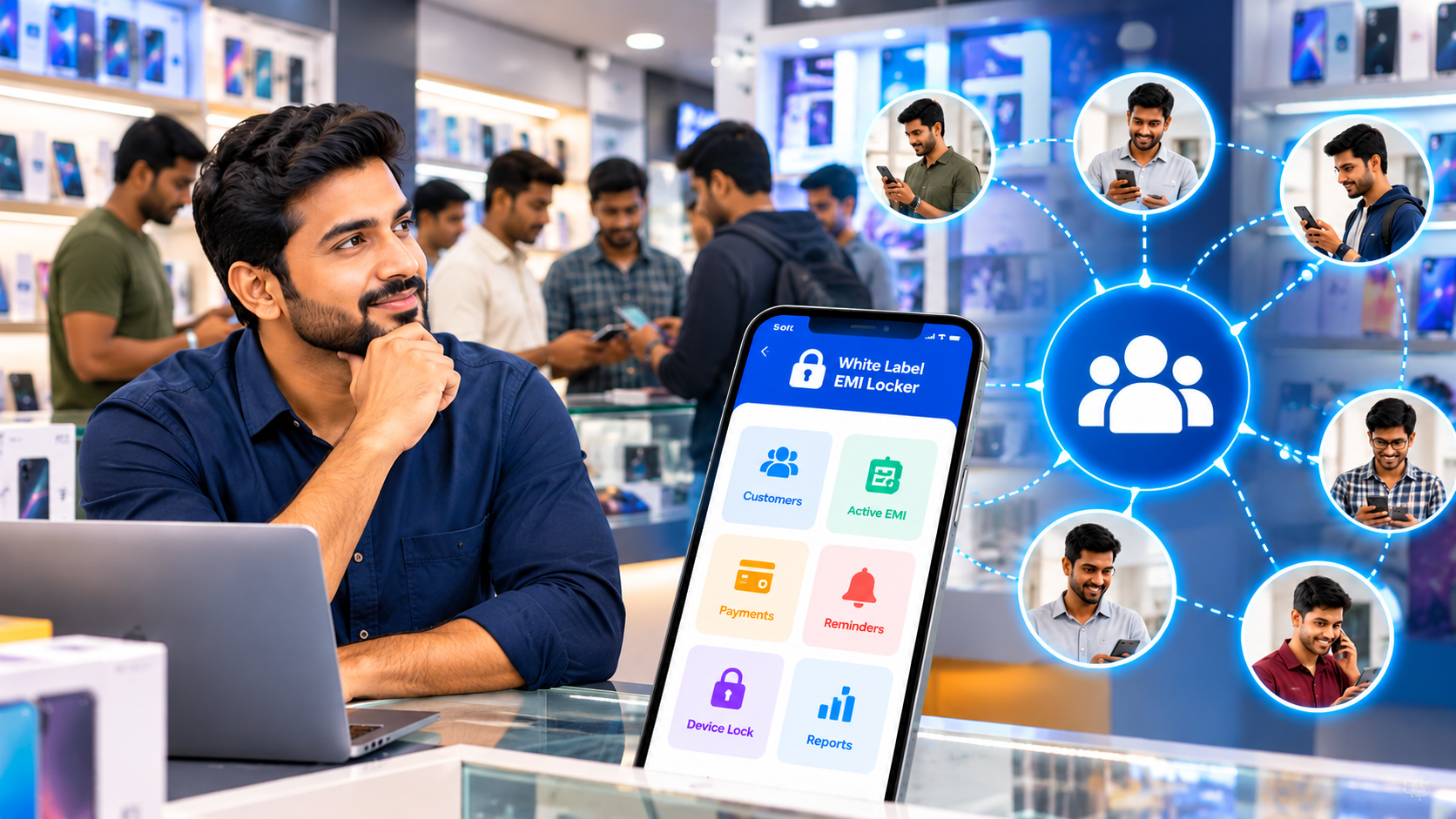
As your mobile business grows, handling EMI records manually can take valuable time away from sales and customer service. White Label EMI Locker helps mobile retailers, distributors, NBFCs and finance companies organize financed-customer information, track installment schedules, and manage supported smartphones through a centralized platform.
Key Features of White Label EMI Locker
- Customer Management: Maintain customer and financed-device records.
- EMI Tracking: Monitor payment schedules and installment information.
- Payment Reminders: Support timely customer notifications.
- Device Management: Manage enrolled smartphones through compatible controls.
- Remote Lock and Unlock: Use supported device features with appropriate authorization.
- Centralized Dashboard: Access important EMI and device information from one place.
- White Label Branding: Offer a customized EMI Locker solution under your business name.
These features can help retailers organize growing EMI operations and reduce repetitive administrative tasks.
For businesses planning to manage 500 or more customers, it is important to confirm software capacity, user access, device compatibility, and support requirements before implementation.
Conclusion
Managing 500+ EMI customers is not simply about selling more smartphones. It also means handling more payment records, customer questions, reminder calls, and financed devices. Without a proper system, these activities can create unnecessary pressure on mobile retailers. A suitable EMI Locker App can help businesses keep customer information organized, monitor payments and manage financed devices more efficiently. With better processes and the right technology, mobile retailers can prepare their businesses for future growth.
Ready to Manage 500+ EMI Customers? Simplify Your Operations Today!
Growing your mobile EMI business should not mean spending more time on spreadsheets and payment follow-ups. White Label EMI Locker offers customizable EMI device-management solutions to help retailers, distributors, and finance companies organize their EMI operations. Whether you manage 50, 500, or more financed customers, explore a system that fits your business needs and expected growth.
Ready to Launch Your White Label EMI Locker?
Talk to Aditya Gupta — Founder & CEO of Devolyt Technologies — and get a custom quote for your EMI Locker platform.
Get a Free Consultation →