

Introduction
Businesses today use smartphones, tablets, laptops, and other connected devices for daily work. Employees use these devices to access company apps, files, emails, customer information, and internal systems.
As the number of devices grows, managing them manually becomes difficult. This is where Mobile Device Management (MDM) can help businesses manage devices, security settings, apps and access from one central platform.
What Is Mobile Device Management (MDM)?
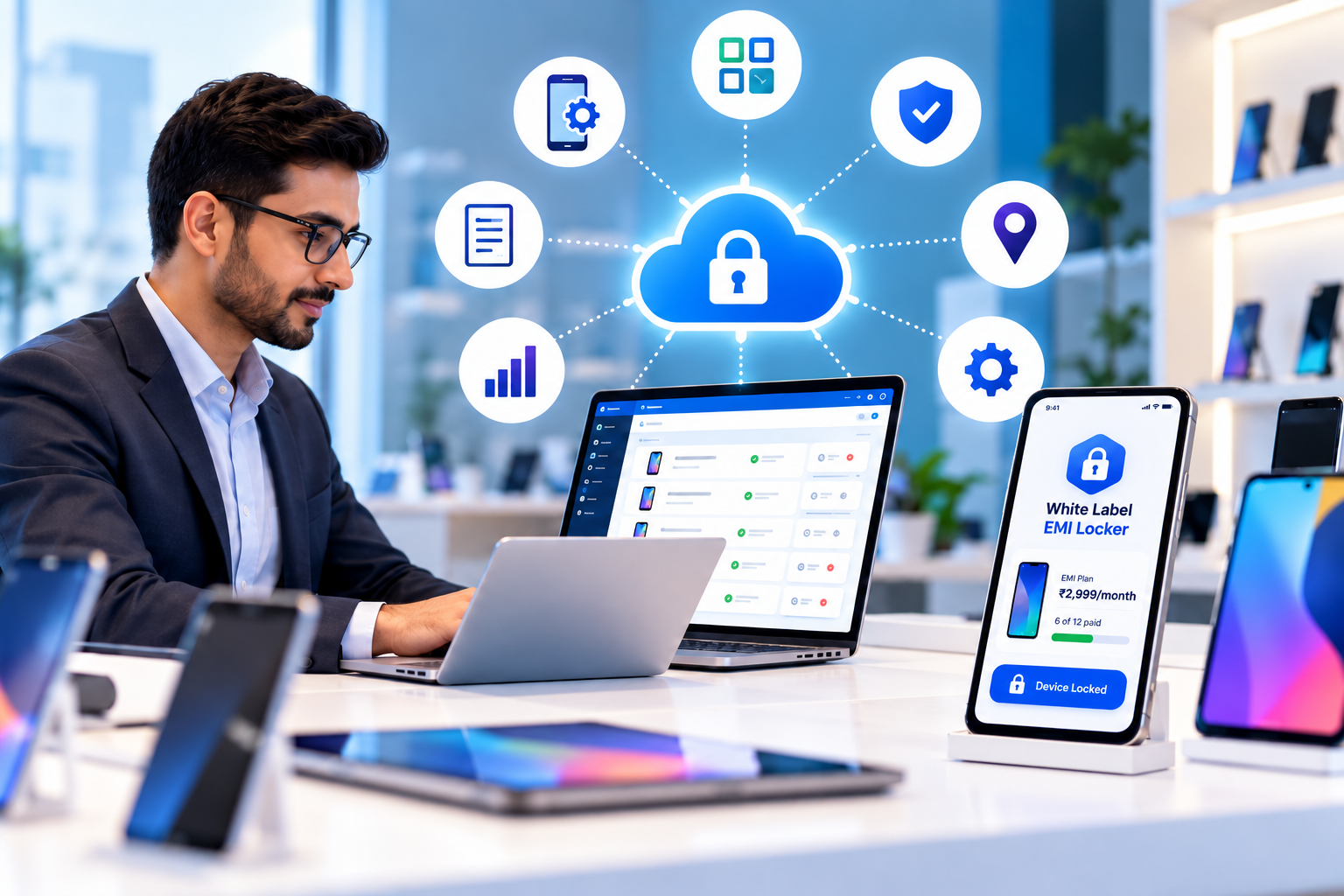
Mobile Device Management, commonly called MDM, is a system used by businesses to manage and control smartphones, tablets, laptops and other devices from a central dashboard.
MDM helps IT teams manage company devices without physically handling every device.
It can be used to:
- Register and enroll devices.
- Apply security settings.
- Manage applications.
- Configure device permissions.
- Monitor device status.
- Control access to company resources.
- Protect business data.
- Support remote device actions.
In simple terms, MDM helps businesses keep their devices organized, secure, and easier to manage.
How Does MDM Work?
An MDM system usually connects enrolled devices with a central management platform.
The process generally includes:
1. Device Enrollment
The business registers the device with the MDM platform.
This may include smartphones, tablets or laptops used by employees.
2. Policy Configuration
The administrator sets rules for the enrolled devices.
These can include:
- Password requirements.
- Screen-lock settings.
- App permissions.
- Network settings.
- Security restrictions.
- Access controls.
3. App Management
Businesses can use MDM to manage applications installed on company devices.
Depending on the platform, administrators may be able to:
- Install approved apps.
- Remove unwanted apps.
- Update business applications.
- Restrict certain software.
4. Device Monitoring
MDM provides visibility into managed devices.
Businesses may be able to check:
- Device status.
- Operating system information.
- Security compliance.
- Installed applications.
- Connectivity status.
This helps IT teams identify devices that need attention.
Why Do Businesses Need Mobile Device Management?
The number of business devices continues to grow.
Without a proper management system, companies may face problems with security, configuration, application control and employee access.
MDM can help businesses manage these challenges.
1. Better Device Security
Business devices often contain sensitive company information.
MDM can help administrators apply security policies such as:
- Strong passwords.
- Screen locks.
- Access restrictions.
- Application controls.
- Security updates.
This helps create a consistent security standard across managed devices.
2. Centralized Device Management
Managing devices individually can take a lot of time.
With an MDM platform, businesses can manage multiple devices from one dashboard.
This is especially useful for companies with:
- Large employee teams.
- Multiple offices.
- Remote workers.
- Field employees.
- Company-owned smartphones or tablets.
Centralized management reduces the need to configure every device manually.
3. Easier App Management
Employees often need specific applications for their work.
MDM helps businesses control which apps are available on managed devices.
IT teams can organize business applications and maintain a more consistent device setup across the organization.
4. Protect Business Data
Company information can be at risk if a device is lost, stolen, or used incorrectly.
Depending on the MDM solution, administrators may have options to protect company data and restrict unauthorized access.
This is important for businesses handling customer records, internal documents, financial information or confidential company data.
5. Support Remote and Field Employees
Many employees work outside the main office.
Sales teams, field workers, service engineers and remote employees may use company devices from different locations.
MDM allows IT teams to manage these devices remotely without requiring the employee to visit the office every time a setting needs to be changed.
6. Maintain Consistent Device Policies
Without centralized management, employees may configure devices differently.
MDM allows businesses to apply the same policies across multiple devices.
For example, a company can create standard rules for:
- Password strength.
- Application access.
- Wi-Fi configuration.
- Device permissions.
- Security requirements.
This makes device management more consistent.
7. Save Time for IT Teams
Manually configuring and checking devices can create a lot of work for IT teams.
MDM helps automate and centralize many routine device-management activities.
This allows IT staff to spend more time on important business and technical tasks.
MDM for Small and Growing Businesses
MDM is not only useful for large companies.
Small and growing businesses can also benefit from device management when they start using more smartphones, tablets, or laptops.
A scalable MDM solution can help businesses:
- Add new devices.
- Manage more employees.
- Maintain consistent security.
- Control business apps.
- Support multiple locations.
This makes it easier to manage growth without creating additional manual work.
MDM vs EMI Lock: What Is the Difference?
MDM and EMI Lock both involve device management, but their main purposes are different.
MDM is mainly used for business and IT device management.
It focuses on:
- Device security.
- Application management.
- Configuration.
- Access control.
- Corporate policies.
An EMI Lock solution is designed mainly for financed devices.
It focuses on:
- EMI payment tracking.
- Customer records.
- Payment reminders.
- Financed-device management.
- Recovery workflows.
- Authorized lock and unlock actions.
So, MDM is mainly an IT management tool, while EMI Lock is more closely connected with device financing and EMI recovery.
Can Finance Companies Use Device Management Technology?
Yes. Finance companies and NBFCs that manage financed smartphones may use device-management technologies as part of their EMI operations.
However, standard MDM software does not automatically include features such as:
- EMI schedules.
- Payment tracking.
- Customer financing records.
- EMI reminders.
- Recovery workflows.
For these requirements, businesses may need a dedicated EMI Locker App or EMI Device Lock Software.
Why White Label EMI Locker for Financed Device Management?
Businesses involved in smartphone financing often need features that go beyond traditional MDM.
White Label EMI Locker is designed around EMI and financed-device management.
It can help businesses manage:
- Customer records.
- Financed smartphones.
- EMI schedules.
- Payment status.
- Payment reminders.
- Overdue accounts.
- Recovery workflows.
- Retailers and distributors.
- Authorized device management.
It also allows businesses to operate the platform with their own branding and business identity.
Who Can Benefit from MDM?
Mobile Device Management can be useful for many types of organizations, including:
- IT companies.
- Enterprises.
- Schools and educational institutions.
- Healthcare organizations.
- Retail businesses.
- Logistics companies.
- Field-service businesses.
- Companies with remote employees.
- Organizations using company-owned mobile devices.
Any business that manages multiple work devices can benefit from a structured MDM system.
What to Look for in an MDM Solution
Before choosing an MDM platform, businesses should consider their actual requirements.
Important factors include:
- Device compatibility.
- Security controls.
- Easy device enrollment.
- App management.
- Remote management.
- User and access controls.
- Reporting.
- Scalability.
- Technical support.
- Ease of use.
The right MDM solution should fit the size and working style of the business.
Conclusion
Mobile Device Management (MDM) helps businesses manage smartphones, tablets, laptops, and other work devices from a centralized platform.
It can improve device security, simplify app management, support remote employees, apply consistent policies, and reduce manual IT work.
For businesses focused specifically on smartphone financing and EMI recovery, a dedicated EMI Locker Software solution may be more suitable than standard MDM alone.
If your business manages financed smartphones and needs EMI tracking, device management, reminders, and recovery workflows, White Label EMI Locker provides a branded solution built around those requirements.
Need a Better Way to Manage Financed Devices?
Use these Top 5 White Label EMI Locker to manage customers, EMI payments, financed devices, reminders and recovery workflows from one platform.
Visit www.whitelabelemilocker.com to explore the solution and learn more.
Ready to Launch Your White Label EMI Locker?
Talk to Aditya Gupta — Founder & CEO of Devolyt Technologies — and get a custom quote for your EMI Locker platform.
Get a Free Consultation →