

Introduction
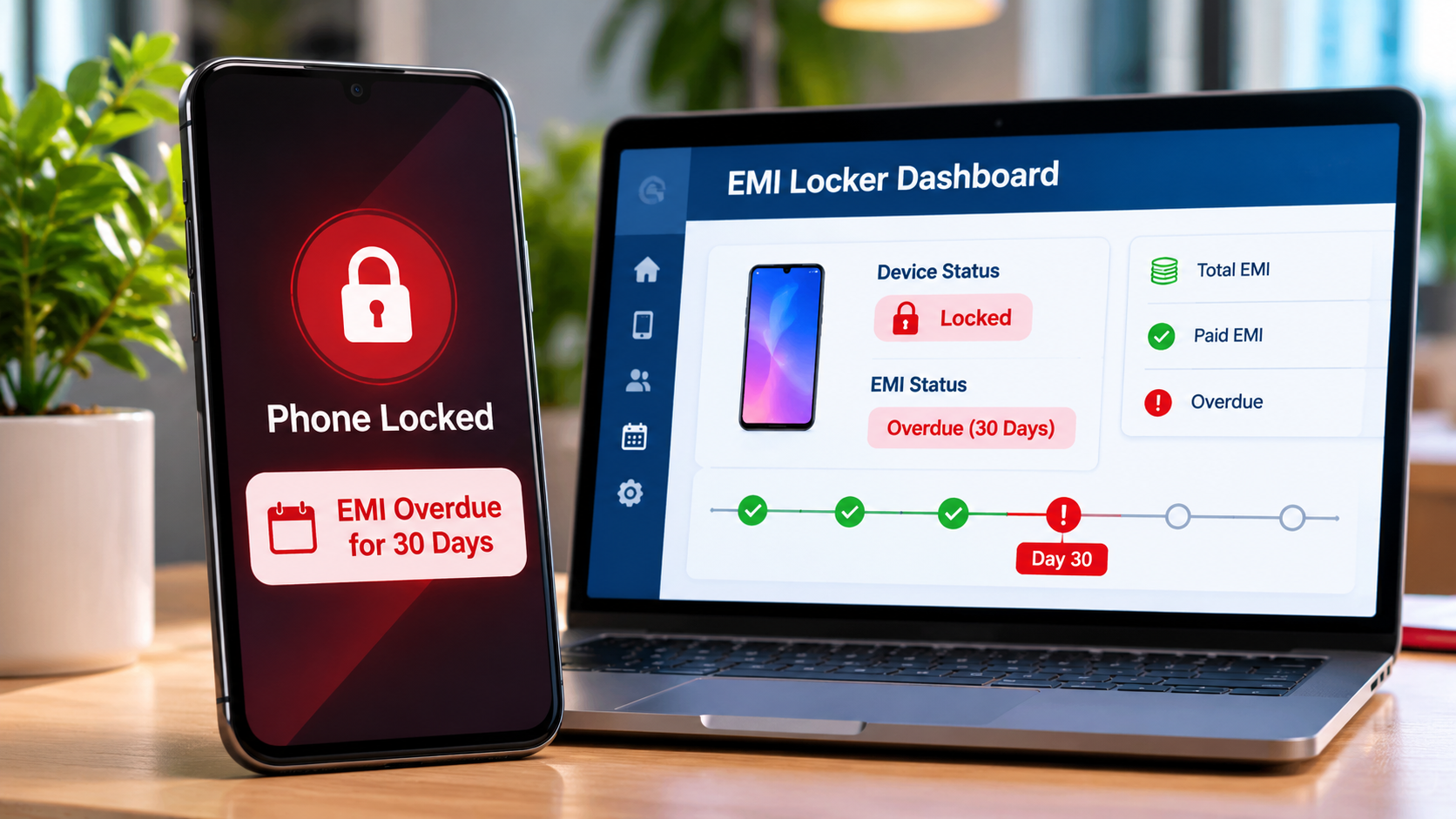
Are you selling smartphones on EMI, but some customers haven't paid their installments for the last 30 days? Are you repeatedly calling customers, sending payment reminders, and still struggling to recover pending amounts? This can be a serious concern for mobile retailers and finance companies. When a phone EMI is overdue for 30 days, it means the customer has not cleared the installment for approximately one month after its due date. This may lead to additional charges, collection follow-ups, and other consequences depending on the financing agreement.
But what should retailers do when a customer misses their phone EMI for 30 days? Can the financed phone be locked? How can an EMI Locker App help manage overdue payments?
Let's understand the possible consequences and practical steps retailers can take.
What Happens When a Phone EMI Is Overdue for 30 Days?
A customer who misses an EMI payment for 30 days may face several consequences depending on the lender's policies and loan agreement.
Here are some common situations:
- Payment Reminders: The customer may receive SMS, email, or phone reminders about the outstanding installment.
- Late Payment Charges: Applicable overdue charges may be added according to the financing agreement and relevant regulations.
- Credit Score Impact: If the lender reports the delayed payment to credit bureaus, it may affect the customer's credit history.
- Collection Follow-Ups: The lender or authorized collection team may contact the customer.
- Device Restrictions: Certain financed smartphones may be subject to authorized device restrictions under applicable agreements and laws.
A 30-day overdue EMI does not automatically mean that every financed smartphone will be locked.
Why Do Customers Delay Phone EMI Payments for 30 Days?
Before taking recovery action, retailers should understand why the customer has missed the installment. Not every missed payment is intentional.
Some common reasons include:
- Financial difficulties or unexpected expenses.
- Forgetting the monthly EMI due date.
- Job loss or temporary income problems.
- Incorrect payment information.
- Failed automatic payments.
- Confusion about installment amounts or deadlines.
For example, a customer may have attempted to pay through UPI, but the transaction failed. If the retailer does not check the payment records, it may create unnecessary confusion. Understanding the actual problem helps retailers choose a suitable solution.
Customer Hasn't Paid EMI for 30 Days? Here's What Retailers Should Do
1. Check Whether the EMI Is Really Pending
Before contacting the customer, verify the payment records. Check the customer's name, outstanding EMI amount, payment due date and previous transaction details. Sometimes, a payment may be successful but not yet updated in the retailer's system. Always confirm the outstanding amount before requesting another payment.
2. Send a Clear Payment Reminder
Instead of making repeated calls, send a polite reminder that includes the correct payment information. For example:
"Dear Customer, your phone EMI payment is overdue. Please check your outstanding installment and complete the payment through the authorized payment channel. Contact us if you need assistance." An EMI Payment Reminder Software solution can help retailers maintain reminder schedules and organize follow-ups.
If you regularly face delayed payments, explore Customers Not Paying Their Phone EMIs? Here's What Retailers Can Do for more practical payment management tips.
3. Speak to the Customer Before Taking Further Action
If the installment remains unpaid, contact the customer through an appropriate communication channel. Ask whether they are experiencing a payment problem or need clarification about the outstanding amount. If the customer is facing financial difficulty, direct them to the lender to discuss any available repayment options. Retailers should avoid threats, harassment, or excessive calls during the collection process.
4. Review the Financing Agreement
Before taking further recovery action, check the original financing terms.
Important details include:
- EMI amount and payment schedule.
- Outstanding installment balance.
- Applicable overdue charges.
- Customer consent for device management.
- Approved recovery procedures.
- Lender contact and complaint information.
This helps retailers avoid incorrect actions and unnecessary disputes.
5. Use EMI Locker Software for Better Payment Management
Managing overdue accounts manually becomes difficult when a shop has hundreds of financed smartphones. An EMI Locker App can help businesses organize:
- Customer financing records.
- Monthly EMI schedules.
- Pending installment information.
- Payment reminders.
- Supported device management controls.
- Authorized device lock and unlock requests.
This allows retailers to identify overdue accounts and manage follow-ups through a centralized system.
Can a Finance Company Lock a Phone After 30 Days of Unpaid EMI?
This is one of the biggest questions mobile retailers and customers ask. A phone is not automatically eligible for locking simply because its EMI is 30 days overdue. Whether a financed smartphone can be restricted depends on the financing agreement, informed customer consent, applicable law, and the device management system. Some EMI Phone Lock Software solutions support remote locking and unlocking on compatible smartphones.
Before any restriction is considered, the authorized lender or retailer should:
- Verify that the installment is genuinely overdue.
- Review the financing agreement.
- Confirm that the restriction is legally permitted.
- Check the customer's device enrollment and consent.
- Follow the approved customer notification process.
Device restrictions should not be used as threats or to bypass fair recovery practices.
What If a Customer Tries to Reset the Financed Phone?
Some retailers worry that customers may reset their smartphones after missing EMI payments. However, a factory reset does not necessarily remove all financing-related device management controls. The result depends on the smartphone, enrollment method, operating system, and installed software.
Read What If a Customer Factory Resets a Financed Phone? to understand how a reset may affect EMI-managed smartphones. Retailers should choose compatible device management solutions and avoid assuming that all smartphones behave the same way.
What If the Customer Stops Answering Calls?
Suppose a customer purchases a smartphone on EMI, pays the first few installments, and then stops responding to reminders. After 30 days, the account remains overdue, and the retailer cannot contact the customer.
In this situation, businesses should:
- Verify the customer contact details.
- Maintain records of appropriate follow-up attempts.
- Confirm the outstanding amount with the lender.
- Follow the authorized recovery process.
- Escalate unresolved cases through approved channels.
For more information, read What Happens If a Customer Disappears After Buying a Phone on EMI?. Retailers should never resort to intimidation, unauthorized tracking, or harassment.
How Can Mobile Retailers Reduce 30-Day Overdue EMI Accounts?
Waiting until an EMI is overdue for an entire month can make payment management more difficult. Retailers can improve their processes by taking a few simple steps.
- Send Early Reminders: Notify customers before installment due dates.
- Maintain Accurate Records: Keep customer payments and outstanding balances updated.
- Make Payments Convenient: Share correct, authorized payment options.
- Review Overdue Accounts Regularly: Identify missed installments before delays increase.
- Resolve Payment Complaints: Check disputed transactions promptly.
- Use EMI Management Software: Organize customer details and payment follow-ups in one place.
These steps can help businesses manage outstanding payments while maintaining better customer relationships.
How White Label EMI Locker Helps Manage Overdue Phone EMIs
White Label EMI Locker offers customizable EMI device management solutions for mobile retailers, distributors, NBFCs and finance companies in India. It helps businesses organize financed smartphone operations and monitor installment schedules through a centralized dashboard.
Key capabilities include:
- EMI Payment Tracking: Maintain installment schedules and recorded payment information.
- Automated Reminders: Keep customers informed about upcoming and overdue payments.
- Customer Management: Organize customer and financed smartphone details.
- Remote Lock and Unlock: Use authorized controls on supported devices.
- Centralized Dashboard: Manage multiple financed smartphones from one platform.
- Custom Branding: Launch an EMI Locker solution with your own business identity.
These features can help retailers reduce manual work and manage overdue EMI accounts more efficiently.
Conclusion
When a phone EMI is overdue for 30 days, mobile retailers and finance companies should focus on verifying the outstanding payment, communicating clearly with the customer, and following the agreed recovery process. Missed installments can result in payment reminders, applicable late charges, and possible credit reporting consequences, but device locking is not automatic and must follow legal and contractual requirements. White Label EMI Locker offers customizable EMI Locker Software to help businesses track installment schedules, manage financed smartphones, and organize payment recovery operations. Want to simplify EMI management and reduce manual follow-ups? Contact White Label EMI Locker today to explore a branded solution for your mobile financing business.
- Website: www.whitelabelemilocker.com
- Phone: +918882653043
- Email: info@whitelabelemilocker.com
Ready to Launch Your White Label EMI Locker?
Talk to Aditya Gupta — Founder & CEO of Devolyt Technologies — and get a custom quote for your EMI Locker platform.
Get a Free Consultation →