

Introduction
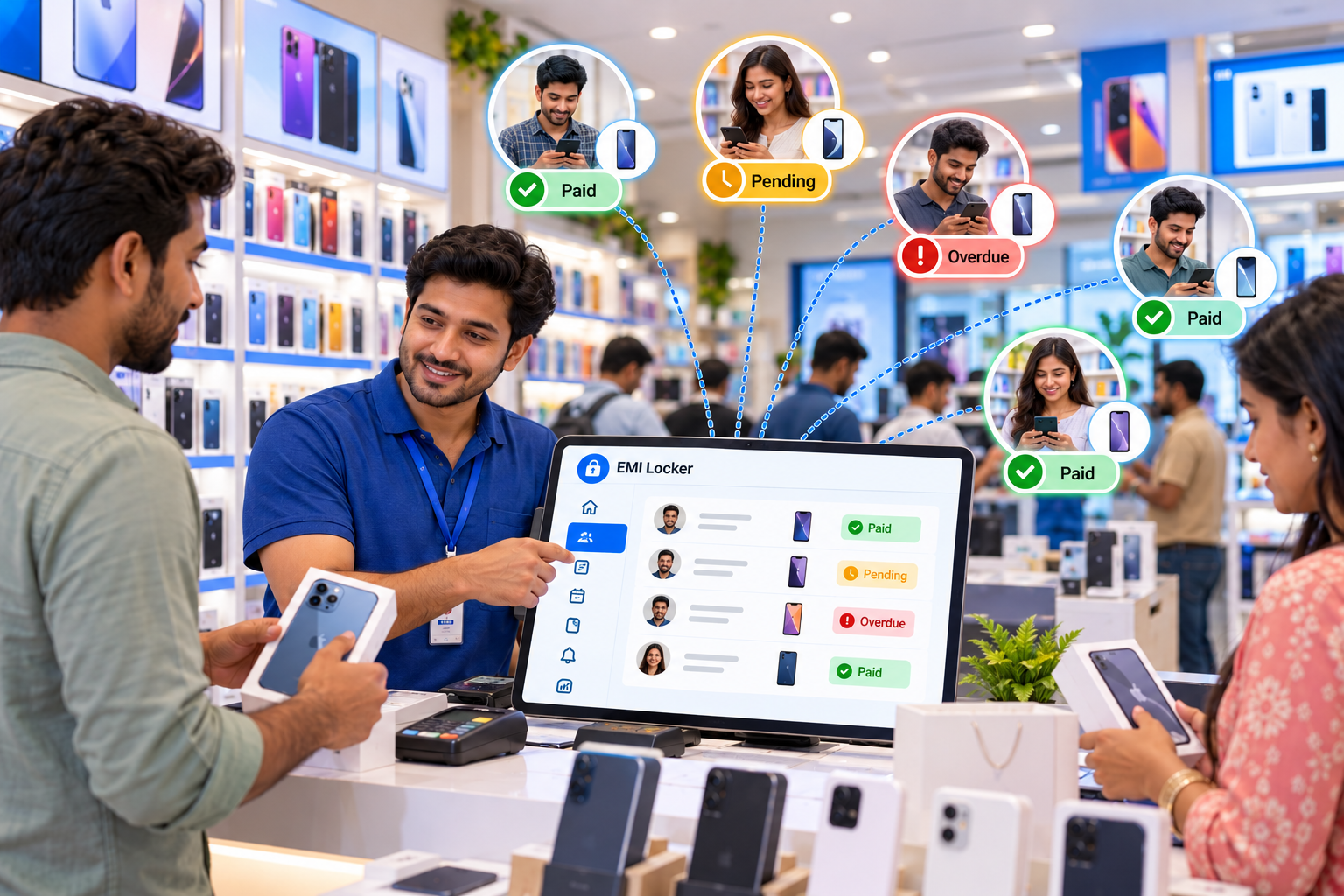
Selling smartphones on EMI is a great way for mobile retailers to increase sales. A customer who cannot pay ₹25,000 at once may find it easier to pay ₹2,500 every month. But as EMI customers increase, managing payments becomes difficult. Some customers forget their due dates, some delay payments and others stop responding to calls. A Custom EMI Device Lock App can help retailers manage financed devices, track EMI payments and organize recovery workflows more efficiently.
Why Is Managing EMI Customers Difficult?
Managing 10 EMI customers may be easy, but what happens when you have 100 or more? Here are some common problems mobile retailers face:
- Missed EMI Payments: Customers may forget their payment dates or delay installments.
- Manual Records: Tracking payments through notebooks or spreadsheets takes time.
- Repeated Follow-Ups: Calling customers individually can affect daily shop operations.
- Overdue Payments: Multiple pending EMIs can affect business cash flow.
- Device Management: Managing many financed smartphones becomes difficult without a proper system.
The solution is to keep customer information, EMI records, and payment follow-ups organized from the beginning.
1. Check Customer Details Before Selling on EMI
Good EMI management starts before handing over the smartphone. Retailers should verify important customer details to reduce payment-related problems later.
- Verify KYC: Collect and verify the documents required for the financing process.
- Check Contact Details: Confirm the customer's mobile number and address.
- Understand Payment Capacity: Make sure the EMI amount is affordable for the customer.
- Set a Suitable Down Payment: Choose an amount that fits the financing agreement.
- Explain the EMI Plan: Clearly discuss installment amounts and payment dates.
Only collect information that is necessary and permitted and keep customer details secure.
2. Explain EMI Terms Clearly
Many payment disputes happen because customers do not fully understand the financing terms. Before completing the sale, explain:
- Monthly EMI amount
- Total number of installments
- Payment due dates
- Applicable late payment charges
- Payment methods
- Device management conditions, if applicable
If you use an EMI Device Lock App, explain its features and obtain clear customer consent before installing or activating it. Providing written terms helps both the retailer and customer understand their responsibilities.
3. Keep Customer and Payment Records in One Place
Imagine selling 50 smartphones on EMI, each with a different payment date. Checking multiple notebooks or WhatsApp conversations every day is not practical. Keep these details organized:
- Customer name and contact number
- Smartphone model and IMEI number
- Financed amount and down payment
- Monthly EMI amount
- Payment due dates
- Paid and pending installments
- Payment follow-up history
A centralized EMI Management Software solution can make these records easier to access and update.
4. Send EMI Payment Reminders on Time
Not every missed EMI is intentional. Sometimes customers simply forget their payment date. Sending reminders before the due date can help customers plan their payments. A simple reminder process includes:
- Before the Due Date: Send a friendly payment reminder.
- On the Due Date: Inform customers about the installment due.
- After the Due Date: Follow up politely if payment is still pending.
- After Payment: Confirm the payment and update the records.
A Mobile EMI Locker App with reminder features can help automate supported notifications, reducing repeated manual calls.
5. Manage Overdue EMI Payments Properly
Late payments are a common challenge for mobile retailers. The important thing is to act early without damaging customer relationships. Here are some useful practices:
- Contact customers soon after a missed payment.
- Ask politely about the reason for the delay.
- Keep records of payment discussions.
- Confirm any revised payment date in writing.
- Follow the agreed financing and recovery process.
- Avoid threatening or embarrassing customers.
An EMI Recovery App can help retailers identify overdue accounts, organize follow-ups, and maintain updated payment records.
6. Use an EMI Locker App for Better Device Management
As EMI sales increase, manually managing every financed smartphone becomes difficult. An EMI Locker App helps retailers manage eligible financed devices and related payment workflows through one platform. Depending on the software and device compatibility, it can provide:
- Device Registration: Add financed smartphones to the system.
- EMI Tracking: Monitor paid, pending, and overdue installments.
- Payment Reminders: Notify customers about upcoming payments.
- Device Management: Manage supported financed smartphones.
- Lock and Unlock Controls: Use authorized device controls according to financing terms and applicable requirements.
- Payment Updates: Keep EMI records organized after payment confirmation.
Device restrictions must follow applicable laws, customer consent, and the agreed financing conditions. Essential emergency access should remain available where required. For businesses looking for their own branded solution, White Label EMI Locker App Development allows the software to be customized with their business identity and operational requirements.
7. Choose the Right EMI Locker Software
Not every mobile shop needs the same features. A small retailer may need basic EMI tracking, while a distributor or finance company may require more advanced device management. Before choosing an EMI Locking Solution, look for:
- Easy-to-use dashboard
- Customer and device management
- EMI payment tracking
- Payment reminder features
- Overdue payment reports
- Secure device management
- Custom branding options
- Reliable technical support
A Custom EMI Locker App can help businesses manage their financing operations according to their specific needs.
8. Follow a Simple Weekly EMI Management Routine
You do not need to spend hours checking payments every day. A regular routine can make the process easier.
- Monday: Check upcoming EMI payments and send reminders.
- Wednesday: Follow up with customers who have pending installments.
- Friday: Review overdue payments and update recovery records.
- Month-End: Match received payments with customer records and check outstanding amounts.
Following this routine can help retailers identify payment issues before they become difficult to manage.
Why Choose White Label EMI Locker?
White Label EMI Locker offers customizable EMI device management solutions for mobile retailers, distributors, NBFCs and device-financing companies. Businesses can use a White Label EMI Locker App to organize customer information, manage financed devices, monitor EMI payments, and support recovery workflows. With White Label EMI Locker App Development, retailers can also create a branded solution that matches their financing processes and business requirements.
Conclusion
Selling phones on EMI can help mobile retailers grow, but managing customers and payments requires a proper system. Keeping accurate records, sending reminders, and using reliable EMI Locker Software can make daily operations easier and reduce manual work.
Still Spending Hours Tracking EMI Payments?
Make EMI management easier with White Label EMI Locker. Explore a customized solution designed around your mobile retail and device-financing business.
Get in touch with our team for a free demo!
- Website: www.whitelabelemilocker.com
- Phone: +91 8882653043
- Email: info@whitelabelemilocker.com
Ready to Launch Your White Label EMI Locker?
Talk to Aditya Gupta — Founder & CEO of Devolyt Technologies — and get a custom quote for your EMI Locker platform.
Get a Free Consultation →