

Introduction
What if a customer tries to remove the EMI lock from a financed smartphone without completing their payments? This is a common concern for mobile retailers and finance companies. EMI Phone Lock Software helps businesses manage financed devices, monitor EMI payments, and apply authorized device restrictions. But can customers bypass EMI phone lock software and what risks should retailers know about?
Can Customers Really Bypass EMI Phone Lock Software?
Yes, some EMI Phone Lock Software can be bypassed, especially when the application has weak security, incorrect installation, or limited device management permissions. However, bypassing an EMI lock is not always easy. It depends on the software, smartphone model, Android version and device enrollment method. A properly configured EMI Device Locking Software solution may provide stronger protection against unauthorized changes. Retailers should understand that no EMI locking solution can guarantee complete protection against every security risk.
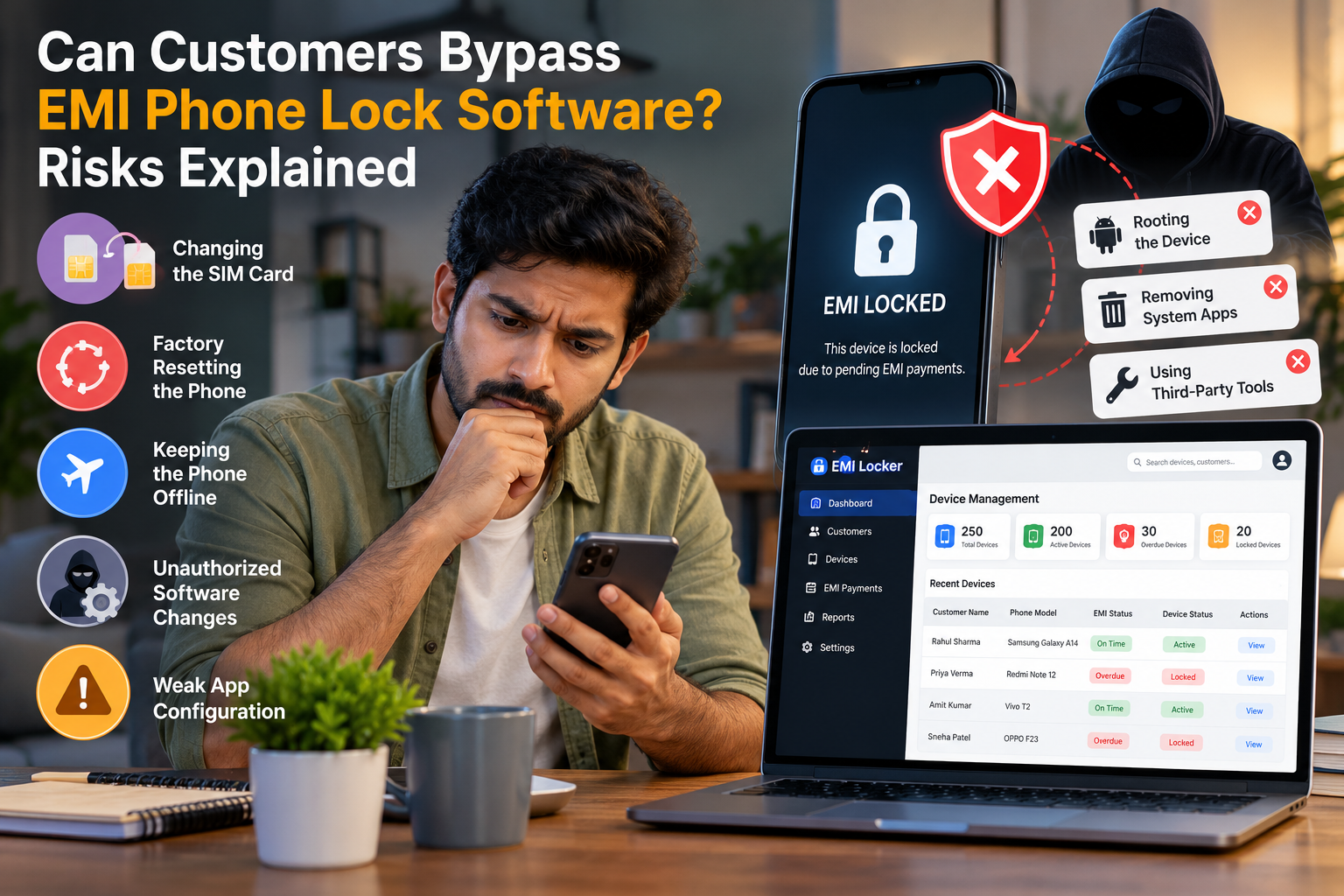
5 Common Risks That Can Affect EMI Phone Lock Software
Here are some common situations mobile retailers should understand when managing financed smartphones.
1. Changing the SIM Card
Some customers may believe that replacing their SIM card will remove the EMI lock. However, many EMI Locker Apps use device-level management rather than depending only on the registered mobile number. Changing the SIM card may affect network connectivity, but it does not necessarily remove the EMI lock.
Read What Happens If a Customer Changes the SIM Card in an EMI-Locked Phone? to understand how SIM changes can affect financed devices.
2. Factory Resetting the Phone
A factory reset removes user data and can affect installed applications. This creates a potential risk for EMI Locker Software that depends only on a standard installed application. Some device management solutions provide factory reset restrictions or managed re-enrollment capabilities on supported devices.
To understand this risk in more detail, read What If a Customer Factory Resets a Financed Phone?
3. Keeping the Phone Offline
Some customers may turn off mobile data or disconnect Wi-Fi to avoid receiving EMI reminders or remote device management commands. When a smartphone remains offline:
- New remote lock commands may be delayed.
- Online payment reminders may not reach the device.
- Device status updates may stop temporarily.
- Existing offline restrictions may continue, depending on the software.
Retailers should choose an EMI Locker App that clearly explains its online and offline functionality.
4. Unauthorized Software Changes
Unauthorized changes to a phone's software can affect the security of an EMI locking application. Basic locking apps may be more vulnerable to interference if they lack suitable management permissions. More advanced EMI Device Locking Software may offer additional device controls, tamper detection, or managed enrollment features. However, these capabilities vary by provider and device compatibility.
5. Weak EMI Locker App Configuration
Sometimes, security problems happen because the EMI Locker App is not configured correctly. Common issues include:
- Missing device management permissions.
- Incorrect device registration.
- Outdated application versions.
- Weak administrator account security.
- Limited monitoring of financed devices.
Retailers should verify device enrollment and test the permitted management features before handing over a financed smartphone.
What Happens If a Customer Successfully Bypasses an EMI Lock?
If a customer manages to disable the EMI lock without authorization, it can create several problems for the retailer or finance provider.
- Increased EMI Default Risk: Customers may continue using financed devices while payments remain overdue.
- Difficult Payment Recovery: Retailers may lose an important tool used in their agreed recovery process.
- Financial Losses: Unpaid installments can affect business revenue and cash flow.
- Reduced Device Control: Retailers may lose access to certain device management functions.
- More Manual Follow-Ups: Businesses may need to spend additional time contacting customers.
However, removing an EMI lock does not cancel the customer's payment obligations under a valid financing agreement.
Retailers facing missed payments can also read Customers Not Paying Their Phone EMIs? Here's What Retailers Can Do for practical ways to manage overdue installments.
How Can Retailers Reduce EMI Lock Bypass Risks?
Choosing suitable EMI Phone Lock Software and following proper device management practices can help retailers reduce security risks. Here are some important steps:
1. Choose Reliable EMI Locking Software
Select an EMI Locker App that supports secure device enrollment, appropriate management permissions, and compatible smartphone models.
2. Verify Device Registration
Make sure every financed phone is correctly registered in the EMI management dashboard before delivery.
3. Keep Software Updated
Regular software updates can help fix security issues and improve compatibility with supported devices.
4. Monitor EMI Payment Status
Review customer installments, pending payments, and overdue accounts regularly using EMI management software.
5. Use Authorized Device Restrictions
Apply device restrictions only where permitted by the customer's financing agreement and applicable laws, with clear customer consent and an appropriate way to restore access.
6. Maintain Customer Communication
Send payment reminders, explain EMI terms clearly, and provide customers with a simple way to resolve payment issues.
A combination of good device management and timely customer communication can help businesses reduce EMI recovery challenges.
How White Label EMI Locker Helps Businesses Manage Financed Devices
White Label EMI Locker provides a customizable EMI device management platform for mobile retailers, distributors, NBFCs and finance companies. Businesses can use the solution to organize their EMI operations and manage financed smartphones more efficiently. Key benefits include:
- Branded EMI Locker App: Create an EMI management application with your business branding.
- Centralized Dashboard: Manage customer and financed-device information from one platform.
- EMI Payment Monitoring: Keep track of installments, due dates, and pending payments.
- Remote Device Management: Use supported device locking and unlocking functions according to authorized financing terms.
- Simplified EMI Recovery: Organize payment reminders and customer follow-ups.
- Business Scalability: Manage growing numbers of financed devices and EMI customers.
With the right configuration and supported devices, White Label EMI Locker Software can help businesses build a more structured EMI management process.
Conclusion
Customers may attempt to bypass EMI Phone Lock Software through SIM changes, factory resets, connectivity changes, or unauthorized software modifications. However, whether these attempts affect the EMI lock depends on the application, device permissions, and security configuration. For mobile retailers, choosing reliable EMI Device Locking Software is an important part of managing financed smartphones and reducing payment-related risks. White Label EMI Locker helps businesses simplify financed-device management, monitor EMI payments, and organize recovery operations.
Ready to Launch Your White Label EMI Locker?
Talk to Aditya Gupta — Founder & CEO of Devolyt Technologies — and get a custom quote for your EMI Locker platform.
Get a Free Consultation →